David Sullivan · 23 September 2026
Analyzing Shifts in User Engagement Metrics Following Major Platform Policy Changes
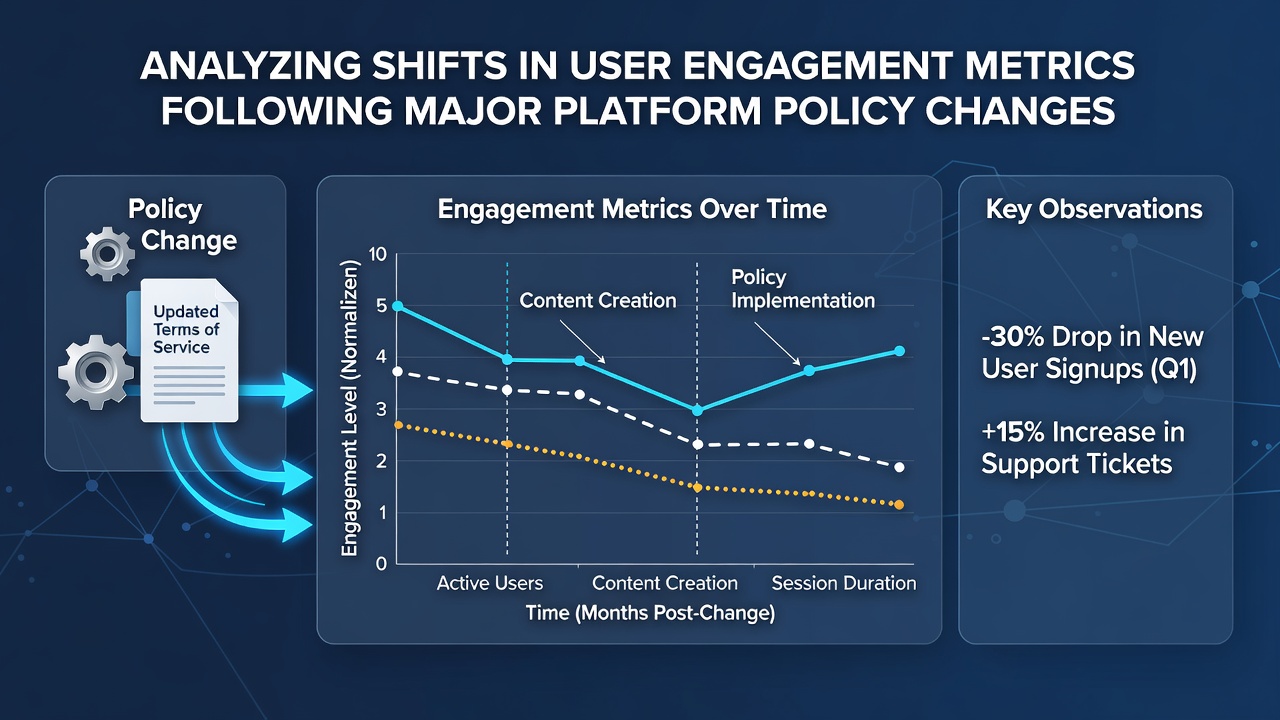
Platform operators introduce policy changes that alter how users interact with content, and researchers track the resulting adjustments in engagement patterns through detailed metric analysis. These shifts appear in areas such as session length, interaction rates, and content sharing volumes, while analysts compare pre-change and post-change data sets to identify trends that emerge across different user demographics and geographic regions.
Common Types of Policy Adjustments
Major platforms adjust rules around content visibility, data collection practices, and moderation standards, and these modifications influence how audiences spend time on sites or applications. For instance, updates to algorithmic recommendations can redirect traffic away from certain post formats, whereas stricter privacy controls may limit personalized feeds that previously drove repeat visits. Data from multiple studies shows that such alterations produce measurable differences in click-through rates and comment volumes within weeks of implementation, while longer-term effects surface in retention statistics collected over several months.
Observers note that changes effective in September 2026, including new requirements for user consent on targeted advertising across several major networks, coincide with reported declines in daily active user figures in initial monitoring reports. Analysts compare these figures against baseline periods from earlier in the year to isolate the impact of the consent mechanisms from other variables like seasonal usage patterns.
Metrics That Reflect Engagement Changes
Time spent per session serves as one primary indicator, and platforms record this value alongside page views per visit to gauge sustained interest after a policy takes effect. Interaction metrics such as likes, shares, and replies also shift, with some categories showing increases when new rules encourage certain types of content while others decrease when restrictions reduce visibility for additional formats. Bounce rates provide further insight, rising when users encounter altered interfaces or reduced personalization that fails to match prior expectations.
Research indicates that average session durations dropped by noticeable margins following privacy-focused updates on several platforms, yet some networks observed compensatory rises in direct messaging activity as users sought alternative ways to maintain connections. These patterns emerge consistently across data sets compiled from North American and European user bases, allowing comparative analysis between regions with differing regulatory timelines.
Methods for Measuring and Interpreting Shifts
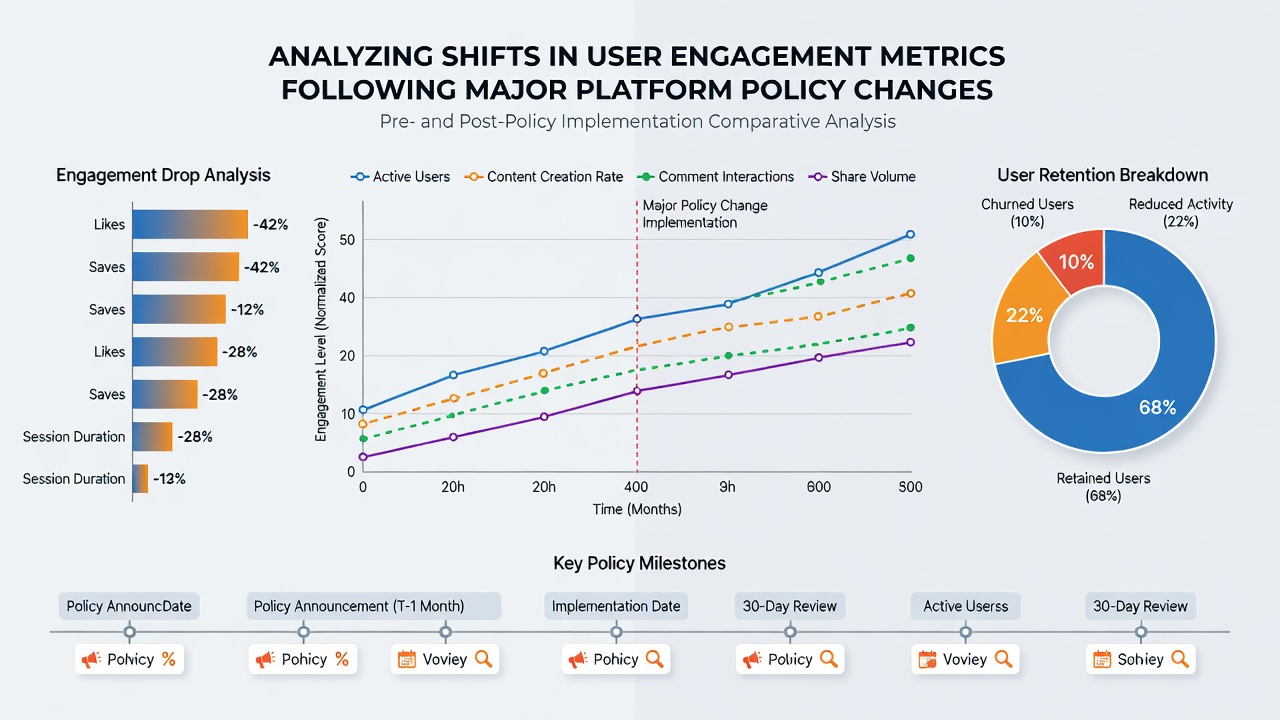
Analysts employ cohort analysis to segment users based on activity levels before a policy rollout, then track how each group responds in subsequent periods. Statistical tools such as difference-in-differences calculations help isolate policy effects from broader market trends, while regression models account for confounding factors like device type or time of day. Case examples include one study that examined a major content recommendation overhaul and found a 12 percent reduction in video completion rates among mobile users, whereas desktop engagement remained stable.
Another examination of a moderation policy tightening revealed elevated report volumes in the first month followed by stabilization, with overall posting frequency returning close to prior levels after users adapted to the new guidelines. External sources such as Federal Trade Commission reports document similar patterns in aggregated industry data, and parallel findings appear in analyses from the European Commission digital strategy publications that cover cross-border platform behavior.
Regional and Platform Variations
Engagement responses differ by platform scale and user base composition, with smaller networks sometimes experiencing sharper drops when policy changes reduce discoverability for niche communities. Larger services may offset these effects through compensatory features such as enhanced notification systems or new interaction tools introduced alongside the core updates. Data collected in Australia and Canada shows that privacy policy revisions produced comparable session time reductions to those observed in the United States, although the speed of recovery varied based on how quickly alternative engagement features rolled out.
Those who study these trends emphasize the value of combining quantitative metrics with qualitative feedback from user surveys to understand motivations behind observed behavioral adjustments. This combined approach reveals that some users reduce activity due to perceived loss of control over their feeds, while others increase participation when policies promote more transparent content sourcing.
Conclusion
Tracking engagement metric shifts after policy changes requires consistent data collection and rigorous comparison techniques that account for multiple influencing factors. Platforms continue to refine their approaches based on these observations, and ongoing monitoring through September 2026 and beyond will provide additional data points for refining predictive models. The patterns identified so far demonstrate clear connections between specific rule adjustments and measurable changes in user behavior across diverse platform environments.