Zoe Schröder · 7 October 2026
Tracing the Evolution of User-Generated Content Standards in Alternative Social Media Ecosystems
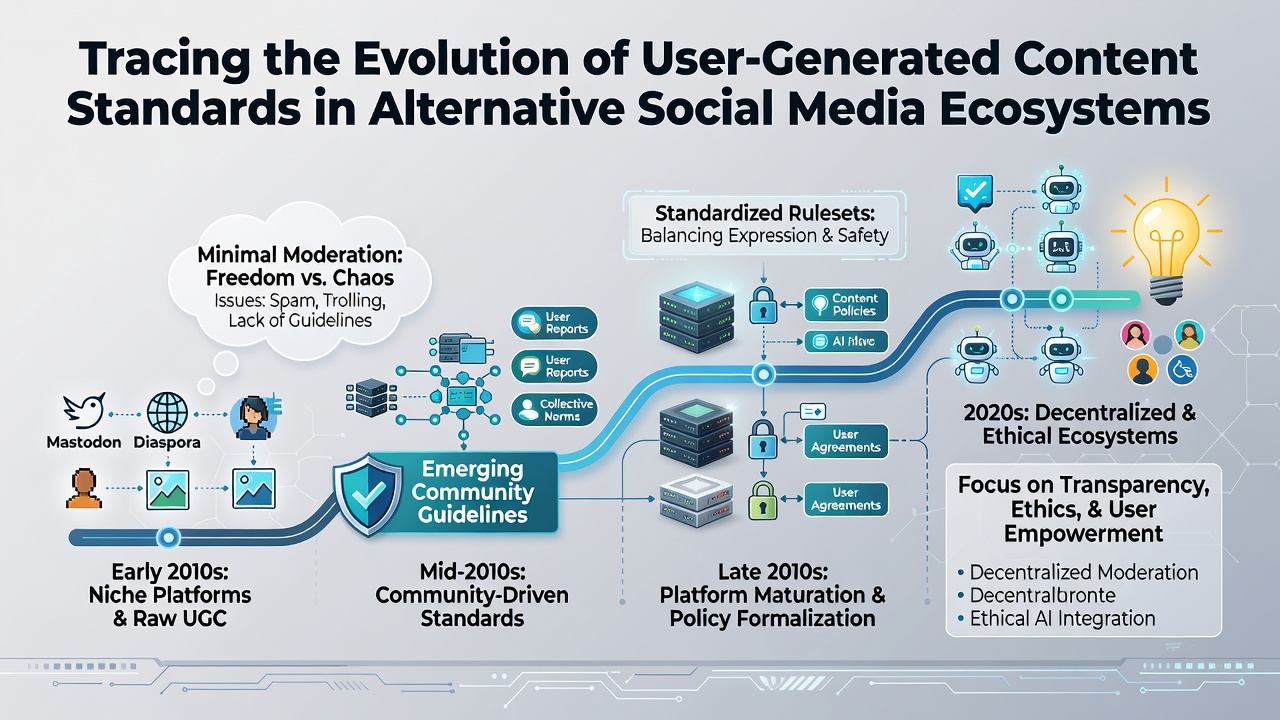
Alternative social media platforms have developed distinct approaches to user-generated content standards since the early 2000s, with decentralized networks emphasizing community-driven rules while centralized alternatives introduced algorithmic moderation layers. Observers note that these ecosystems emerged as responses to content policies on larger platforms, leading to varied frameworks for handling posts, comments, and media uploads across forums, microblogging sites, and federated servers.
Initial Development in Early Decentralized Systems
Usenet groups and bulletin board systems established baseline practices for content oversight during the 1990s and early 2000s, where volunteer moderators enforced guidelines on topics ranging from technical discussions to hobbyist exchanges. These systems relied on manual review processes and user reports, with standards evolving through repeated community votes on acceptable material. Researchers have documented how such models influenced later platforms by prioritizing transparency in rule enforcement over automated filters, and data from archival studies shows consistent patterns of escalation procedures for violations that persist in modern alternatives.
By the mid-2000s, sites like early Reddit iterations and independent forums refined these methods through karma systems and subreddit-specific policies, allowing subgroups to set their own thresholds for what qualified as appropriate contributions. Studies indicate that this customization reduced centralized bottlenecks yet introduced inconsistencies across different communities, as one analysis of forum archives revealed varying enforcement rates based on volunteer availability and local norms.
Expansion Following Major Platform Shifts
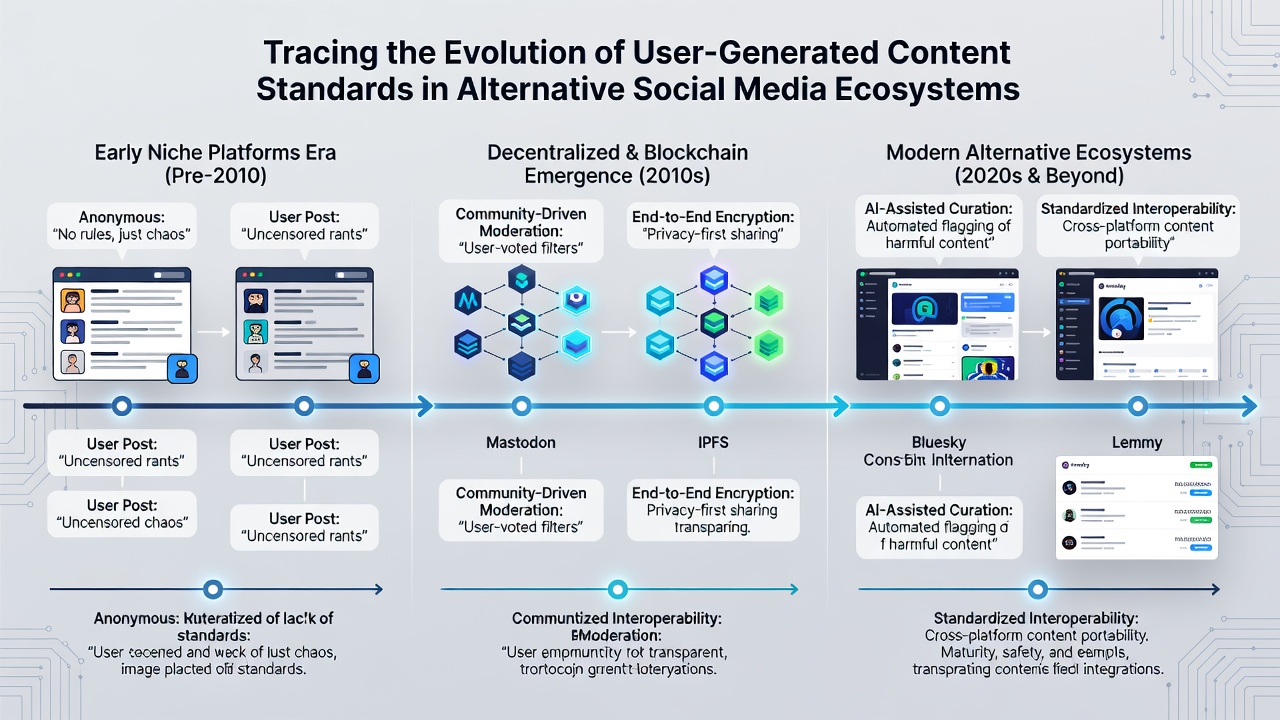
Following the 2016 policy adjustments at prominent networks, alternative ecosystems experienced rapid growth in user bases and corresponding updates to content protocols. Platforms such as Mastodon adopted ActivityPub standards that distributed moderation responsibilities across independent instances, each with autonomous rulesets for handling spam, harassment, and misinformation. This structure enabled servers to defederate from others deemed lax on standards, creating a patchwork of acceptable practices that users navigated through instance selection.
Bluesky and similar projects introduced additional layers during this period, incorporating user-controlled labeling systems and public moderation logs that documented decisions in real time. Figures from platform reports show increased adoption of these tools after 2018, with integration of machine learning aids for initial flagging that human reviewers then verified. Those who track these developments highlight how such hybrid approaches balanced scalability with the decentralized ethos, although interoperability challenges occasionally led to fragmented visibility for certain posts.
Regulatory Frameworks Shaping Contemporary Practices
Legal requirements have played a central role in standardizing user-generated content handling across alternative platforms, particularly through measures like the European Union's Digital Services Act that took effect in stages through 2024. European Commission documentation outlines obligations for risk assessments and transparency reports that many federated services adapted to meet, even when operating outside direct jurisdiction. Platforms responded by implementing unified reporting interfaces and appeal mechanisms that aligned with these directives while preserving instance-level autonomy.
In other regions, authorities such as Australia's eSafety Commissioner have issued guidelines on online safety that prompted similar adjustments in content removal timelines and user notification procedures. Academic reviews from institutions tracking global digital policy note parallel developments in Canada, where proposed legislation emphasizes proactive measures against harmful material without mandating centralized control. These influences converged around October 2026, when several alternative networks released coordinated updates to their moderation APIs to facilitate cross-platform compliance tracking.
Implementation in Key Alternative Ecosystems
Mastodon instances have refined their standards through iterative updates to server software, incorporating features like content warnings and visibility scopes that users apply at posting time. Community guidelines on larger instances often reference external resources from research bodies for defining hate speech and misinformation categories, with regular audits to maintain consistency. Lemmy and Pixelfed, operating under similar federated principles, extended these models to link aggregation and image sharing, respectively, adapting vote-based ranking and takedown workflows to suit their formats.
Threads integration with the fediverse brought additional scrutiny to verification processes, as cross-posting capabilities required alignment on labeling standards for sensitive topics. Data from usage metrics indicate steady growth in labeled content during 2025 and into 2026, reflecting broader adoption of granular control tools. Observers point to case examples where smaller instances experimented with AI-assisted moderation pilots that complemented rather than replaced volunteer oversight, yielding measurable reductions in response times for reported items.
Conclusion
The progression of user-generated content standards in alternative social media reflects ongoing adaptations to technological capabilities, legal mandates, and community preferences. From foundational manual systems to integrated regulatory responses evident by October 2026, these ecosystems continue to refine mechanisms for balancing openness with accountability. Continued documentation from regulatory and academic sources provides the basis for understanding these shifts without prescribing specific future directions.